Sunday, 5 January 2014

 PHOTOGRAPHY/ART


I take photographs because I have always found life to be a ravishing affair.  I am fascinated by people; I am entranced by the things that people imagine and produce and build, by that which  people have forever found beautiful.  I am in constant wonder at the sheer scale and scope and mystery of our natural world.  There, in every moment, is a world of sublime beauty and, for whatever reason, mankind has always, it seems, been impelled to freeze, to hold, to suspend, that beauty for the ever-eager eye and soul to gaze upon.  We need not know why we are this way, I suppose.  I think we glimpse aspects of our own, sometimes neglected and dishonoured, souls when we respond to art in whatever form.  Indeed, Leonardo da Vinci asked what must have been a rhetorical question.  “Do you know that our soul is composed of harmony?”

Often our response to life is intuitive, emotional even, and therefore we can sometimes find ourselves lost for a way in which to express our recognition, acknowledgement and appreciation of what may seem, at the same time, to be an utterly new experience.  Helen Levitt, known primarily as a “street photographer” said, “Since I’m inarticulate, I express myself with images.”  And one of my great heroes, Andre Kertesz said, “Seeing is not enough; you have to feel what you photograph.”  I feel that the greatest danger to the soul is indifference; art, in whatever form, can propel us back into the maelstrom of life and feeling, into an excited remembrance of things that have perhaps been misplaced, but assuredly not lost.  Art, I believe, reminds us of who we are.


I wrote this a few days after the death of my mother-in-law.  She died in hospital, just over a year ago, immersed in a deep morphine-induced sleep, having suffered the unthinkably dreadful effects of a deep pressure sore.  Her sore developed at home and, after much reluctance to be admitted to hospital, she finally agreed to to so when the sore was too far advanced to heal.  It seems (without the benefit of an autopsy to be sure) that she died of septicaemia.   She was 93 but had the spirit and the bright playful eyes of a 17 year old girl.   

Birth and death ... two rites of passage, both equally loaded with emotion and a sense of something momentous, huge.  The beginning of a life, and the end of a life .... or so it seems.   If you believe, as I do, that our 3D experience is only one aspect of a richer, more profound reality, then you might feel, too, that birth and death could be treated with a great deal more consciousness and care, respect and awe than is currently given in our culture.

 Fear imbues all our dealings ... even at birth, anxiety prevails.  Home births are rarer now, hospital births being the expected norm.  From the moment of birth, tests, advice, the presence of health visitors, weight checks and a general miasma of insecurity surrounds a Western mother as she seeks to find her way.  Instinct is virtually pushed aside as we begin to care for our babies because ‘experts’ are given ultimate credence.   The huge amount of TV and publishing time and space given to these experts confirm that we have been taught, and learnt very well indeed, to give ultimate credibility to outside authorities.   And so our children are immediately born into a family and a society in which anxiety and distance are a given.

At the death of a loved one, we find ourselves in yet another unfamiliar place.  Our fear of the unknown, of the sad and messy reality of death, of the aura surrounding death, enables us to hand over to strangers (professional, qualified, sensitive perhaps, but still strangers) the care of our relatives as they approach death, and care of their remains after death.  We follow the norms set up for us by industries that are really there to simply expedite the removal and disposal of a dead body.  A simple process.  How many of us know that it is quite legal NOT to use a coffin?  And yet countless millions of us purchase boxes of varying styles, price, toxicity, with all their accompanying paraphernalia, only to burn them a week later.  We spend thousands of pounds on this disposal.  Jessica Mitford exposed the excesses of the outrageous funeral industry in the USA a few decades ago, but still we continue to follow the trends.  There are other choices, and yet we still automatically give the choices over to others.

How many of us have the courage to immerse ourselves in the whole process, from start to finish?  How many of us can put down what we are doing, give up our comfort and need for entertainment, in order to provide grass roots, nitty gritty care?  There is a book by Ram Dass, called ‘How Can I Help?’, which gives a credible explanation for why so many of us feel we want to help ... but don’t.  He asks us to consider how fearful we are in getting involved.  If we step forward to help at one moment, we may become enmeshed, pulled in beyond our comfort zone, and it is that fear of involvement that stops us doing what is, often, the decent and necessary thing.

Why are we fearful in this way?  Because, from birth, we are surrounded by fear, and so it goes on.   On and on, a life compromised by fear.  And because we are eminently programmable beings (as advertisers and politicians well know), with three-level brains already set up (from birth via our faulty nurturing practices and its accompanying and premature push of the child into independence) to survival mode, then it seems almost foolish to expect anything otherwise.  But our hearts whisper to us constantly and we are so unaccustomed to this sound, so afraid of being seen as foolish (after all, were we not told not to let our hearts rule our heads often enough?) that we hesitate to step forward to ... what, question?  Protest?  Challenge?  We could never do that easily with our parents, our schools, and so, now, we find ourselves still caught between our hearts and instincts and our fear of authority.  We are like children, still, looking up to those in authority and terrified of making waves in the sanctified halls of our institutionalised lives.  We are in thrall to the power structures that have grown up around us because we were actively discouraged from taking self-responsibility.  We were taught, through fear of punishment, to obey authoritarian teachers, and thus our own inner knowing was, from birth, replaced with a fearful compliance. 

It is hard to observe oneself displaying hesitation, a fear of making a fuss, an almost automatic giving over of responsibility to the person ‘in charge’.   One can feel, in a hospital, an immense sense of inadequacy accompanied by a sometimes over-compensatory gratitude and trust that those caring for one’s loved one are acting in their best interests.  Therefore, it is mortifying to realise that one has let an issue pass purely because one did not have the courage to pursue a question, to continue the dialogue until completely satisfied.   Sometimes we feel embarrassed because we feel we should be more fully informed.  Sometimes we do not want to make fools of ourselves by questioning procedure.  It is only later that one comes to realise the disempowerment inherent within us that causes this hesitation, this almost wishy-washy response to what is a hugely significant event. 

This almost automatic giving way of our own power is frightening in its scope.  Instead of looking within when we feel depressed, we seek medication from without.  Instead of following our instincts, we put our tiny babies into solitary confinement and ignore cries that would, from an animal, bring instant attention.  We become ill and, fearful of pain and even death, demand drugs to bring ease of body and mind.  Our children exhibit behavioural difficulties and we not only seek external help but readily receive the drugs with which to drug them.  We have given permission, in effect, for industries to grow up that cater for our every perceived need and thus are disempowered ever more and ever more deeply.

A vision I hold is that suffering, to the extent we see it today, in a horrible and unnecessary heresy.  We have moved so far from our simple and very divine roots, from tribal wisdom, that, from birth until death, we live a half-life, seeking joy because somehow we know it is possible but hardly believing that it is.  Therefore we unthinkingly take on and are convinced by the messages we are fed by authoritarian bodies that are fully aware of our readiness to be manipulated and ultimately ruled.   In many cultures, children do not have tantrums, let alone behavioural difficulties.  In these cultures, depression and violence and heart disease are unknown.  In these cultures, the elders are held in deep respect, and never, ever die alone in the care of paid strangers.  My vision holds that our pain at witnessing  these things in our culture is, right now, impelling us to return to our basic, true roots, is impelling us to listen to our hearts and work out WHY we are so afraid to involve ourselves, so afraid to give up our comforts, so afraid to take responsibility.

Prevention is so easy in the place our culture stands currently.  Initial education, via printed material provided by NHS and TV advertising, are perhaps a simple first step towards preventing the suffering of so many elderly people before it even begins.  Prevention could go deeper, though.  We could re-think the very basis of our lives.  We could take back our power and trust that we have access to a deeper wisdom than can ever be given by outside agencies.  A complete re-think of our child-rearing practices and a renewed respect for the formative power of family life, would be the obvious and most deeply powerful starting point, even if the effects took more than a generation to be felt.  Optimal nurturing invariably leads to an adult who is likely to be healthier, mentally and physically, and who will naturally, without effort, take on social responsibilities.  His life will inevitably be love-led, and his family and society will gain from that.   He will certainly be a huge influence on those around him, an inspiration even.  He is likely to be less open to the ills of old age when that time comes.  Families may, through this, come back to the natural tribal way, where it would be seen as incomprehensible to leave a baby or an elderly person alone, to fend for themselves, or to give over their care to institutions.

My sorrow in seeing my own mother, and now my mother-in-law, die in less than ideal ways, leads me to want to seek something better.  It would be easy to blame ‘the system’, but I want to go further and use my God-given passion and intellect and feelings to seek a better way, to inspire others to see that we are responsible for bringing change to a struggling world.  If we did not give away that responsibility so readily, then there would be no power behind the commercially-driven structures and the politically-suspect bodies that ostensibly exist for our good.  Shops close down when their merchandise is of no interest to shoppers.   The shopper comes to know, through curiosity and a passion to live well, that there are hundreds of alternatives to the supermarket.  So too in our precious lives we come to know, through our discomfort at what does not work, what really CAN work.  To bring a sense that life is a beautiful thing.  That suffering is not inevitable.  And that as one individual family finds unity and healing, then the possibility for that healing to come to other families, and to society as a whole, is a hopeful and likely outcome. 


THE ARTIST’S WAY
by Julia Cameron


Countless people have said that this book was instrumental in enabling them to find the ‘vein’ of creative gold they instinctively felt to be present inside but that had seemed, until then, to be remote and inaccessible. 

I believe that, whether we consider ourselves artists or not, we are all instinctively creative beings.  Look at the cornucopia of magazines and television programmes inspiring us to re-create our homes and our gardens; see how attendance at art exhibitions has risen so sharply in recent years (The Louvre in Paris attracting over nine and half million visitors in 2012, with the Tate Modern attracting just under five and a half million visitors in the same year); notice how YouTube is saturated with shared music that brings so many millions utter joy; just peek into a bookshop and see tables and shelves aglow with the work of inspired writers and illustrators; glance through people’s windows as you walk by and see flowers in funky vases, not to mention paintings and photographs framed in fur and mosaic and perspex, and chandeliers made from twisted cutlery and....

We are such sparky beings, and there seems to be no end to the variations seen in the field of design, be it in the world of cars or furniture or ceramics or perfume bottles or socks or airport concourses ... We delight in it and would, I believe, go into a very real decline as a society if such expression was quelled and quashed.

But, moving on a little into the more private world that we each inhabit, some of us find ourselves yearning and dissatisfied, and often we cannot work out why.  It is almost as though the beauty external to ourselves, in nature and in that created by our fellows, causes a dawning sense of wild homesickness.   Something deep within starts to stir, and almost immediately we close it down.  It is a whisper .... I could do that.  I want to do that.  But .... I can’t.  I am not an artist.  I can’t. 

Julia Cameron, in her wise and deeply spiritual book, tells us otherwise.  She declares, on behalf of each and every one of us, that we are born creative.  We need only to identify and then gently and lovingly dismantle the barriers that are holding us from this natural creativity.  She has written a book which invites us to re-discover and embrace our inner artist, and although it asks for a commitment to ‘creative recovery’ that can sometimes feel uncomfortable (and even painful), it is chockful of intoxicating tasks and games which very soon start to bring a joyful sense of recognition ... a recognition that we are so much bigger than our conditioning and our upbringing and our teachers and our society have led us to believe!  We recognise that a huge part of ourselves has been temporarily disowned, placed in the shadows.  Synchronicities begin to happen in our lives which give us a startling and delicious sense that we are part of a universe which is friendly, supportive, eager for our fulfilment.  

She has created a course comprising twelve weekly sessions, each of which presents tasks that unmask the self-appointed tyrants of perfectionism, self-criticism and downright fear (fear of failure, of scorn from peers etc), and which very quickly reveal the riches beneath. 

One is, in addition, asked to gift oneself with a little extra time, each morning before rising, in which to write of one’s joys, one’s gripes, one’s conundrums and certainties, one’s current state of mind, anything that is filling one’s mind, on three sides of A4 paper.  This is a powerful process, which somehow or another creates space and clarity and an increased intuitive sense.  Basically, these ‘Morning Pages’ give you permission to be who you are.  They are a radical invitation to self-acceptance.  They enable you to honour the true you.  And when you honour yourself, all self-criticism is rendered impotent and irrelevant, and the creative energy that is waiting to flow, flows ... through you ... with no resistance.

And how about this ... the Artist’s Date!  You give yourself permission to joyfully go on a weekly date with yourself!  On this date, you do things, buy things, see things, which feed your inner artist.  The deal is, the instruction if you like, is that no-one comes with you.  You choose; you experience; you enjoy.  You commit yourself to a time each week in which you nurture and feed your neglected creative soul.  The relief and joy this brings cannot be over-stated.  This is another statement given to yourself: no matter what, this date is an important commitment to enable myself to completely embrace my full creative nature.  None of this need cost very much money necessarily.  After all, your inner artist is a child needing nurturing and fun, and it is the attention and time which is important.  A solitary visit to a gallery or the bookshop cafe.  A search for as many gargoyles on as many churches as possible in an afternoon.  Going back for the pair of hand-made earrings you saw last time at the weekly craft market.  Treating yourself to your favourite author’s new novel in hardback, thus honouring and supporting yourself and the author.  A visit to the art shop to pick up a box of handmade pastels.   The purchase of ten exquisite postcards showing your favourite works of art.  

These tasks, which of course could be seen as daily/weekly rituals regardless of whether one follows The Artist's Way, contain a strangely mysterious power.  We come face to face with a self we might have lost sight of, even mourned.

I may run some courses here in my home town.  In the meantime, the book remains on my shelf:

Click here to see 'The Artist's Way' description and reviews.


Saturday, 23 July 2011

MOOJI


The beauty of this man's teaching and presence is that he conveys, immaculately and lovingly, the sheer unimportance of our concerns.  Our concerns stem from fearful thought, past thought.  He invites us to consciously stay in this present moment, where the Divine quietly and eternally resides.  Beyond concept, beyond mind, lies ineffable bliss. And when one has turned towards that bliss, away from the addiction of our stories and dramas, then (seemingly paradoxically) things start to flow with more ease.  


I guess this is what Jesus meant, in his prayer, when he said, "Thy will be done...."  


My heart is full of gratitude and praise for this man's presence on the earth at this time!  Here is a quotation from the book, Enlightenment: The Yoga Sutras of Patanjali - A New Translation and Commentary, by MSI.


"Praise is the primary response of an evolving soul to the glory and wonder of the perfection of the Universe.  Praise is also the primary means of rising beyond the Waking State.  With praise alone, one can completely erase all self-destructive beliefs and internal programmes .... praise is like magic, it washes the soul with gratitude and love.... Praise is easy to develop .... simply by deciding to appreciate rather than criticise or condemn.  Life is easy to change ..."  


Maybe Mooji would ask one to go beyond even that.  He would say, 


"There is only That."


Here is compassion and grace incarnate:


http://www.youtube.com/watch?v=huRyLbDSz78

Om shanti!

Monday, 4 July 2011

FREE HUGS IN CHELTENHAM


Sam (far left) and Tin (second from right) with beautiful French students


Today, my son Sam and Jan Akkerman's nemesis, our most dear friend Tin, went to Cheltenham to offer some free hugs!


As Secretary of our village's Parochial Church Council, I felt it was my duty to report this activity (done on behalf of God, who couldn't be there in person, and who asked us to represent him by proxy), at our meeting tonight.  I am uncertain as to whether it will be minuted or not.  


In fact, the reason I told the Council was that I had been extremely moved by our vicar's monthly letter in our parish magazine.


In concluding his letter, Reverend Woodger wrote:


"... if we want to find God, we do not have to look far; he is all around us, in everything, but never closer than in the people he has given us to love."


Gorgeous, huh?


See the slideshow, set to Michael Jackson's beautiful "Heal the World", that Sam made this evening.  


We hope you enjoy it, and that it might inspire you to do the same!

Tuesday, 14 June 2011

ALTERNATIVE SCRABBLE


Here's a good game to play if you and your children are bored and aimless during the school holidays.


It was invented almost by accident.  Read on.


"Dearest Miss Marion


I think you would have laughed the other night.  Sam wanted to play Scrabble, and so we did.  At a certain point, early on in the game, I inserted a word, meaningless in itself, and understood only by Sam and I.  Tanois.  From there, we used our letters to make words that were unknown, but we had to quickly come up with meanings that were authoritative and likely.  Here is a selection from Sam:

Tinib - a fruit found in the Atlas mountains of Morocco

Yowt - the milk of the Gazelle, in Africa

Wec - a barkless tree, found in Madagascar

Djonnut - a poltergeist found in Arabic countries

Bartm - something found on the point of a pyramid

Hakenee - a poisonous berry found on the banks of the Nile

Some others, from me:

Carnid - a sociable vegetarian

Ultog - slightly out of fashion

Dlesh - a collective term for the varied colours seen in a sunset

Af - the first letter of the Atlantean alphabet

Erst - a butler's cloth

Hempry - Texan dialect for 'Emperor' (viz. Maximilian, Emperor of Mexico, circa 1867) (one must say it in a cracked, old voice, nostalgically, perhaps creaking on yer ole rockin chair)

Nagex - a drug, used as an antidote to the sting of the Puffer fish

I don't know why we thought about you, and wished you were there, but we did.


Love, Cheryl" 


I received this reply.

"Today I flemmed a gazelle and phut Tinib with Yowt.  I took magnogentum intellio pills durned to perplixicate between Hakenee and Tinib.  Imagine my pbrim when I spilt the Yowt on a Bartm.......OH..........PHLENGIEFOSTOSTERUS GLIMP.....

My springum octed when I saw a Djonnut on the Bartm sucking Yowt from a Ultog Erst......Eeeeeeh........TNANI GODLIM FROUT.......

I tanged the Djonnut in Hempry with quavering antipolosh and blit the Djonnut into a Wec.  It was Spiflik, toto toto Spiflik.

Tomorrow I stemp a Nagex from a Hirst that has swallowed an Af.


Addendum

Or Af an Af, doesn't need to be a whole Af does it......perhaps Mistress Cheryl could enlighten on this point."


"Miss Marion
I believe it is always rather risky dividing (or, indeed, multiplying) the Af. 

I highly recommend leaving the Af intact, and, if possible, putting it in a room by itself, preferably under a gidj.

Now, I understand that many would say,  "How is it possible for this woman to recommend putting an Af under a gidj?"  After all, since time immemorial, seekers after the truth have foolishly passed under the gidj, always with ill effects.  Perhaps enlightenment eluded them, but can this be blamed on the gidj?  I hardly think so.

But on a more optimistic note, I wonder whether you have heard in your outpost that the Vatican has made the act of beckant punishable by ex-communication?  It's true.  What will we do with our gloves now?

And on the subject of the church, I hear that Hildegard of Bingen suffered woemfec like many of the other sisters of her order.  Did Julian of Norwich suffer in the same way?  And Teresa of Avila?   Perhaps Yowt might have been the answer?  Sad that those magnogentum intellio pills weren't available then.  No wonder them nuns was perplixicated, if you are anything to go by!

I am totally astonished that you had the wherewithall to blit that Djonnut into a Wec.  And you tanged it in Hempry first?  My God.  My mother always ground up a few dried langrati (if she could get them) and then popped them in boiling oil.  That way, no-one got hurt.

But, look, I realise I have left the frojr on, and izolga is billowing out and filling the kitchen.  Looks like I've burnt the potato farles, and Lord knows what I'll give the boys for their breakfast now.  Certainly ain't got no Yowt since that Djonnut got in. Luckily I didn't have a Ultog like you did, although I did have the one Erst.  It didn't seem interested in that, luckily.

Perhaps I'll give the boys that for their breakfast, although Lord knows what I'll be having.  I don't like Erst.  It gives me a Therst."


As you can see, you don't have to stick to the original word meanings. And imagine the high standard of essay that could result in English class.

I think this should really prepare your children for their eager return to school.


Sam and Miss Marion


Friday, 10 June 2011

ROUTE 66 - THE VIDEO


Thanks to the generosity of the owner of La Attica, Clive, and the manager of Nelson's Diner, Shelly, Sam has now completed his music video for 'Route 66'. He used a really fine backing track, and added two or three guitar tracks of his own. This was then synchronised with the video he made this week.  Click below for the cool result:


I think it rocks!

Thursday, 9 June 2011

Hafiz


Rumi is, rightly, celebrated as a bringer of Sufi wisdom to our collective doorsteps.  Hafiz, maybe, is less well known.  I have a delicious yellow book called The Gift, which is full of Hafiz's poems as translated by Daniel Ladinsky. Here is one called:


LET'S EAT


Why
Just show you God's menu?
Hell, we are all
Starving -
Let's
Eat!


Another:

EVERYWHERE

Running
Through the street
Screaming,

Throwing rocks through windows,
Using my own head to ring
Great bells,

Pulling out my hair,
Tearing off my clothes,

Tying everything I own
To a stick,
And setting it on
Fire.

What else can Hafiz do tonight
To celebrate the madness,
The joy,

Of seeing God
Everywhere!


Hafiz lived at around the same time as Chaucer, and his work became known in the West largely through Goethe and subsequent translations by Ralph Waldo Emerson.

Daniel Ladinsky has, as far as I know, published two other volumes of Hafiz's poetry in translation, The Subject Tonight is Love and I Heard God Laughing.


Thursday, 2 June 2011

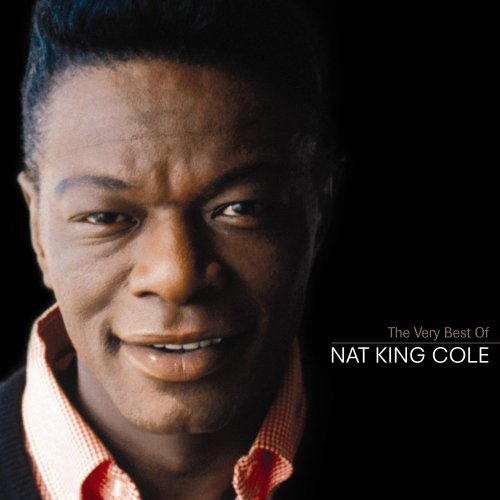
NAT KING COLE - ROUTE 66


Nat King Cole recorded this number in 1946! What a quartet!

http://www.youtube.com/watch?v=dCYApJtsyd0

I remember hearing George Benson singing Nature Boy and being utterly entranced.  http://www.youtube.com/watch?v=4cU2yJaBZqg


And now take a look at Nat doing it!

http://www.youtube.com/watch?v=Iq0XJCJ1Srw&feature=related

No wonder I believe in a beneficent God!

Tuesday, 31 May 2011

JAN AKKERMAN


I was fifteen when Focus blasted its insane way into my young life.  'Moving Waves' sent me to places too numerous and personal to even name.


Late last autumn, I was with my son at the home of his good friend, the wild and wonderful Matty. Matty's friend, a handsome young Jehovah's Witness, was there too, and this friend suddenly said,


"Hey, guys, you must see this..."


And he had YouTube blazing out with Hocus Pocus before you could even take a breath. He was so pleased to be showing us such a weird and revolutionary thing!  I loftily said,


"Young man, that guitarist is the great Jan Akkerman!"  I drew the name seamlessly from my bag of lost memories.  "I was listening to this before you ....etc."


Home again, I had YouTube do its magic and discovered that Jan Akkerman has been doing some stupendous things since then!

I also discovered that he was to tour the UK soon! God, how good life can be!   I booked, immediately, and seven long months later, on 1 May 2011, together with my man and my friend Tin (she of The CD Collection), floated blissfully down the M4, across the bridge and into Welsh Wales.  Oh, historic date!

The Globe, Cardiff, looked rough.  It looked the sort of place that you might enter, never to emerge again


We didn't care! 

Inside, we found smiling bouncers.  We breathed in fragrant smoke from joss sticks glowing in dark and intricate corners.  Up purple staircases we went, under great Moroccan lanterns and past psychadelic art never before dreamt of, and into the music bit!  There, huge Babylonian pillars in a North African casbah, and a stage all set and ready for The Jan Akkerman Band!  You could see Jan's Les Paul waiting there in its case. It was excitement enough just to see it.  And a nice Fender bass just waiting for Wilbrand Meischke to grab it by the neck and shake it into life.  Coen Molenaar's great pile of keyboards looked oh so promising.  Marijn van den Berg's drums looked good too.  They proved to be good and loud.


Jan arrived on stage all of a sudden and picked up that Les Paul.  An excited "You're a legend, Akkerman!" from the back drew laughter and some self-deprecating remarks from the Dutchman. Something to do with age making anyone a legend eventually.  Then, it began.


But I can't tell you what it was like because I went into a realm that simply cannot be named or described.  That's what sublime music does to one, I guess.  So take a look at these links, and see what you think.

 http://www.youtube.com/watch?v=UBGxYfQ7Gy0&feature=related
http://www.youtube.com/watch?v=IzdcEKtU6CQ

I can just say that Tin did go up to the sound man in the interval and asked him to turn it down a bit.  Does that tell you anything?

I wish this was my photograph

Wilbrand Meischke, who was standing nearby, rather ironically recommended earplugs.


I give thanks to God for music and the musicians who bring that music to us. Hallelujah baby!

Monday, 30 May 2011

BANK HOLIDAY MAYHEM!

Wishful Thinking are a brilliant band.  www.wishfulthinking.me.uk  They have a wide-ranging set, performing numbers from the 1950s to the present day.  Johnny B Goode to Mayhem!  They are all consummate musicians.  Creative and funny.  Professional and tight.


Sam performed two numbers with Wishful Thinking last night at a Bank Holiday bash at The Seven Tuns in Chedworth.  Things were pretty wild!  Here is a link to his video of "Bad Case of Loving You (Doctor Doctor).

http://www.youtube.com/watch?v=dJskPlkiGKU

Sunday, 29 May 2011

Pontiac Silver Streak

The incredibly kind proprietors of La Attica, the Latin-American dance studio of choice in Cirencester, opened their garage today.  Inside - a black 1950s Pontiac Silver Streak.


It rumbles, and growls, and rules the road.


Out in the courtyard, Sam and I began our work on his music video for 'Route 66'.  The Pontiac officiated.  It was beautiful.


Have a look at La Attica's website!  www.laattica.co.uk   Even if you're not into dancing, the website itself is a feast for the eye.

Monday, 23 May 2011

RANDOM ACTS OF KINDNESS

The 'Free Hugs' movement was inspired by the desire of Juan Mann (pseudonym understood by saying it aloud!) to bring love to his brothers and sisters by performing 'random acts of kindness'.  His own loneliness at the time brought an empathetic wish to ease the possible loneliness of others.


Interestingly, when I first spotted the chaps offering free hugs in Trafalgar Square in London, I felt a little bit hesitant. All my trust and intimacy issues raised their wary heads.  What, a hug from a STRANGER?  I'm not too sure ....


It is possible that this dear man was feeling the same.  But he went ahead and did it anyway.  And so did this one.


The chap in the background looks a bit bemused by the whole thing!  But the word RANDOM speaks volumes, I think.  It implies that kindness is being offered totally unconditionally.  No conditions whatsoever.  That certainly made me consider this: am I kind only when it is easy?  Do my conditioned ideas about justice and morality make me hold back sometimes?


Here is a link to a video about random acts of kindness.

  http://humanityhealing.net/2009/05/random-acts-of-kindness/

I hope you enjoy it.  Oh, and here is a quote from the Dalai Lama's Twitter:


"The aim of spiritual practice is to become the friend of all beings, concerned about them and ready and able to help them."


@


Offical website:  www.cherylcordery.co.uk
Facebook:  www.facebook.com/No-3-Photography
Twitter: @

Sunday, 22 May 2011

Sam Cordery and Stray Cat Strut


I was listening to Stray Cat Strut this evening; that fine number from 1981 by Stray Cats.  I was twenty-three then, and I remember a crazy summer of freedom and such laughter.  When I mentioned this song to my son, Sam, he played it and immediately fell in love with it.  So much so that he has made a rather a fine video of himself, playing the guitar accompaniment to a very good backing track.   Click here to see it!

http://www.youtube.com/watch?v=gs0RNMC5EdQ

His details:
Website:  http://www.samcordery.co.uk
Facebook:  http://www.facebook.com/Sam-Jack-Cordery
Twitter:  @


Two cool cats


Stevie Ray Vaughan


This man inspired countless musicians to reach higher.  He passionately encouraged people addicted to drugs and alcohol to reach deeper.  His death in an helicopter crash, after four clean years, seemed too tragic.  But our understanding does not go deep enough, oftentimes, and I somehow suspect he is still around, encouraging and inspiring those who want to know.


Not long before he died, he recorded an album with his brother, Jimmie Vaughan.  It was called 'Family Style'.  The track, 'Tick Tock' is good to hear.  Here are the words.


One night while sleeping in my bed I had a beautiful dream
That all the people of the world got together on the same wavelength
And began helping one another
Now in this dream, universal love was the theme of the day
Peace and understanding and it happened this way


The sick and the hungry, had smiles on their faces
The tired and the homeless had family all around
Streets and the cities were all beautiful places
And the walls came tumblin' down


People of the world, all had it together
Had it together for the boys and the girls
And the children of the world look forward to a future


Remember, tick tock, tick tock, tick tock people
Time's tickin' away
Remember that, tick tock, tick tock, tick tock people
Time's tickin' away


I had a vision of blue skies from sea to shining sea
All the trees in the forest stood strong tall again
Everything was clean and pretty and safe for you and me
The worst of enemies became the best of friends


People of the world, all had it together
Had it together for the boys and the girls
Children of the world look forward to a future


Remember, tick tock, tick tock, tick tock people
Time's tickin' away
Remember that, tick tock, tick tock, tick tock people
Time's tickin' away


Remember that, remember that


People of the world all had it together
Had it together for the boys and the girls
Children of the world look forward to a future


Remember, tick tock, tick tock, tick tock people
Time's tickin' away
Remember that, tick tock, tick tock, tick tock people
Time's tickin' away .....


Here is a link for the video that was made after Stevie died.


First you see Jimmie.  Then Stevie's gentle vocals begin.


My son's passion for music led us to SRV.  Just to possess some images of him, I took some screenshots.  Some have resulted in some painterly, even pastel, effects.


Saturday, 21 May 2011

HOW SMILING IS CONTAGIOUS

Here is a video in which David Hamilton PhD explains why smiling is contagious.

http://spiritlibrary.com/videos/david-r-hamilton-explains-how-smiling-is-contagious

And here's a nice one to make you feel good.


PS  If you happen to recognise yourself, I hope you will enjoy being shown illustrating the power of smiles.  Please let me know if you would like me to take it down, and I will sadly do so!

Saturday, 14 May 2011

American Dreaming

Sam and I have been researching American-style diners for a new music video we are planning.  "Route 66", no less.  Next up, long finned Cadillacs.